

Work
What Can You Wear Under a Hard Hat in Winter?
A liner made for the job, once the maker of your hard hat agrees. OSHA put that in writing in 2006. Everything after that is layers: your head, your ears, your face and a dry spare for the afternoon.
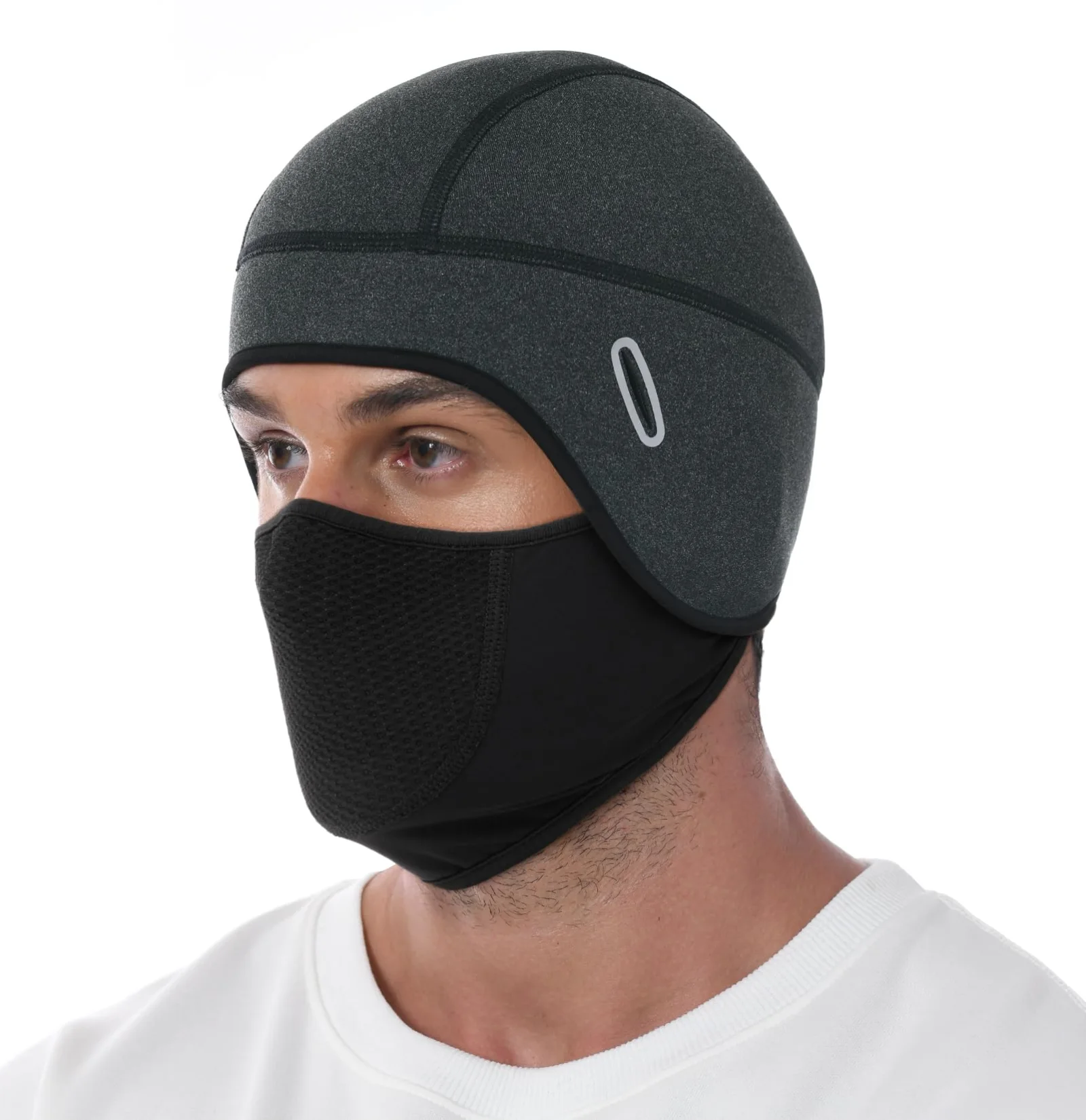
The first properly cold morning on site always goes the same way. You pull a knit hat on under the hard hat, the shell rides up an inch and wobbles every time you look down, and by ten o'clock the hat is damp and your ears are colder than they were without it. So you start wondering what you are actually allowed to wear under there, and what will stay put.
The short answer is a liner made to go under a hard hat, after the maker of your hard hat agrees. The longer answer starts with a letter OSHA wrote in 2006.
The rule behind the hard hat
OSHA's head protection standard, 29 CFR 1910.135, requires protective helmets wherever falling objects could injure the head, and helmets designed to reduce electrical shock wherever workers are near exposed electrical conductors. The helmets themselves have to follow ANSI Z89.1 or be shown to protect as well. The standard itself says nothing about winter, and that gap is what the 2006 letter fills.
What OSHA said in 2006
In April 2006 OSHA answered the question directly in a standard interpretation letter about caps and other apparel under a hard hat for cold weather. The letter makes five points, and they are worth having in front of you before you buy anything.
- OSHA's rules do not expressly prohibit cold weather garments under hard hats.
- The ANSI helmet standards treat winter liners as accessories to the helmet.
- A liner specifically designed to be compatible with the hard hat is therefore not prohibited.
- A garment that detracts from the protection the helmet gives would violate the rule.
- OSHA recommends allowing only liners designed for the hard hat in use, and checking with the hard hat maker.
Two details in the letter matter more than they first appear. It notes that one hard hat maker says nothing at all should be worn inside its helmets. And it quotes the ANSI rule that winter liners for Class B helmets, the class rated for electrical work, have no metal parts.
Why the maker of your hard hat gets the last word
Anything you add under a hard hat sits between your head and the suspension the maker designed. The maker knows how that helmet was built to sit and whether a liner of a given thickness changes it, which is why OSHA sends you to them, and why one maker's answer is simply no.
So the order is: helmet manual first, then the maker, then whoever handles PPE on your site, and only then the liner. Our winter and cooling caps for this job are sold as hard hat liners, and the check with the maker of your helmet comes before you wear one under it. Once you have the go-ahead, put the liner on, put the hard hat on over it and look at how it sits. If the shell rides higher, rocks when you nod, or the suspension has to be let out to fit, take that back to the maker before your shift.
What stays out from under the shell
Some things fail the test before you even ask. A thick knit beanie lifts the shell, which is the clearest example of a garment that detracts from the helmet. A hood bunched under the suspension does the same and moves when you turn your head. And a hat with a light in the cuff carries a battery and a circuit board, metal and electronics that have no place under a Class B helmet. Keep your LED beanie for the walk to the truck and swap it for a thin liner at the gate.
Why the hat matters in the cold
OSHA's cold stress card explains what you are protecting against. Cold air and wind chill pull heat from the body. Hypothermia is a drop in body temperature from the normal 98.6°F to 95°F or less, and frostbite can happen above freezing once wind chill is counted. Two of the risk factors on the card are dressing the wrong way and wearing wet clothing. Its advice is loose insulating layers, an insulated jacket, gloves, insulated waterproof boots and a hat.
NIOSH adds the detail that matters under a hard hat: a hat cuts the heat lost from your head, and the ears, face, hands and feet all need covering. A spare hat, gloves and socks in the truck are on the same card. That last point is easy to skip and hard to argue with, because the liner that was dry at seven is often wet with sweat by lunch.
Layering from the head down
Think of the cold-weather kit as layers that each do one job, with the hard hat still sitting where its maker intended.
| Layer | What it does | A MELASA option |
|---|---|---|
| Thin cap | Keeps heat in at the crown under the shell | Lightweight Warm Skull Cap |
| Ear covers | Keeps the wind off the ears | Winter Helmet Liner with Glasses Holes |
| Face and neck | Covers the cheeks, nose and throat in wind | Thermal Fleece Balaclava |
| Spare | Replaces a damp liner at lunch | Winter Helmet Liner, 2-Pack |
Check every layer that goes under the shell with the maker of your hard hat first.
The Winter Helmet Liner with Glasses Holes is built for this kind of fit: thicker at the ears, thinner on top, with flat seams, and it stretches to fit heads from 22.4 to 24.4 inches. A reflective MELASA mark catches headlights in the parking lot before sunrise.
When the wind is in your face
Ear covers handle most mornings. On the days when the wind comes straight at you across an open site, the face needs covering too, and that is the job of a balaclava. The trouble with most is that you have to take the whole thing off to drink or talk. The Thermal Fleece Balaclava has a separate face cover that pulls down on its own, a mesh panel over the mouth and reflective accents, and the fleece runs down to cover the neck.
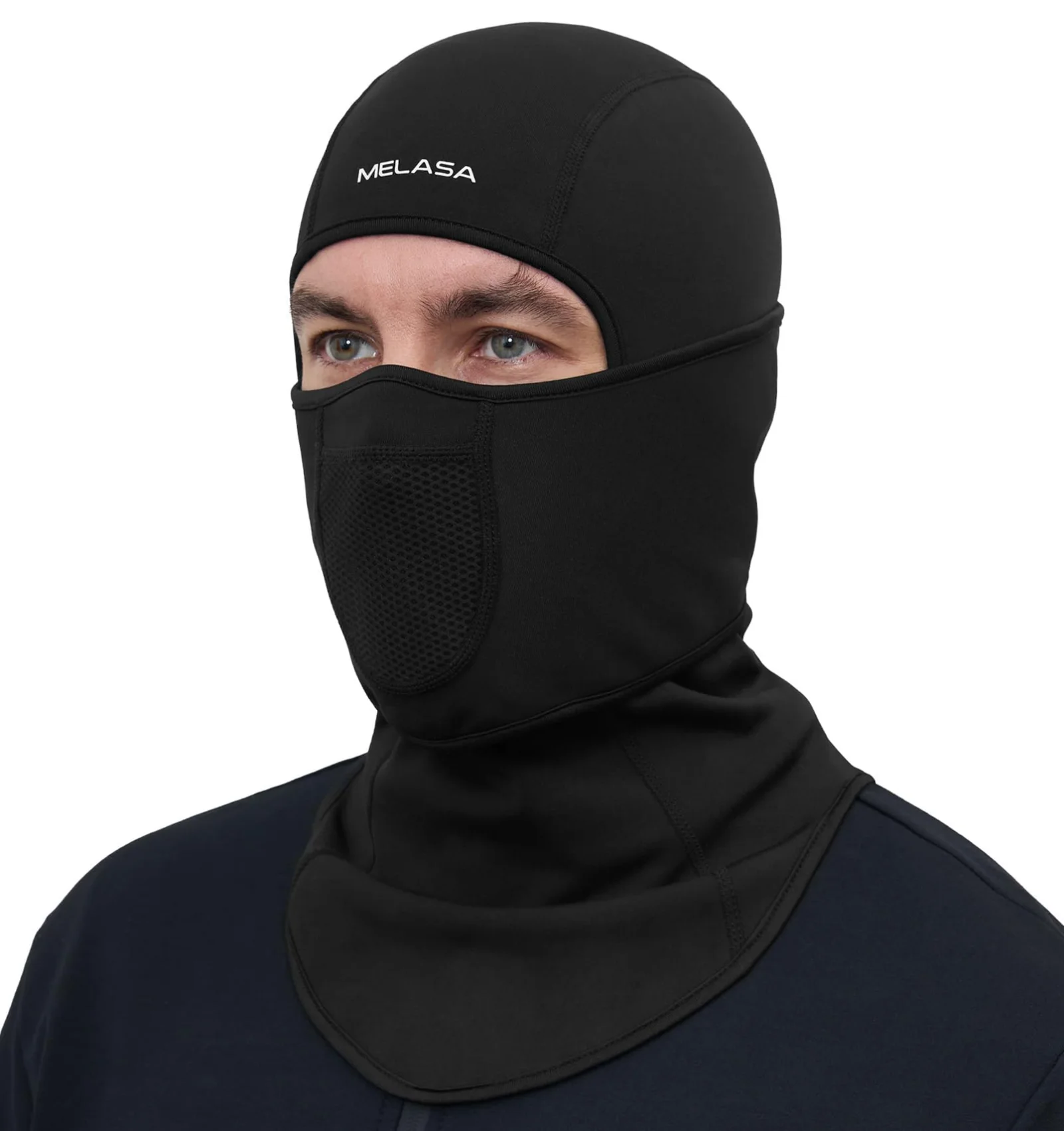
The 2-in-1 Balaclava Helmet Liner works the other way round. It is a fleece skull cap first, with a face cover that tucks away at the top when you do not need it. It fits heads from 21 to 24.5 inches and has slots for the arms of your glasses.
If you wear glasses
Glasses add a problem of their own under a liner: the fabric pushes the arms against your head, and after an hour the pressure behind the ears is all you can think about. Liners with glasses slots let the arms pass through the fabric instead of under it. Our Winter Helmet Liner and the Ear Warmer Helmet Liner both have them, and on the ear warmer the slots themselves are reflective.
A slot changes the comfort, not the rule. If your site requires eye protection, the eyewear still has to satisfy the eye and face protection rule OSHA enforces, and our eye protection guide covers what that means for glasses wearers.
Keep the spare dry
Sweat is the winter problem nobody plans for. You dress for the cold at seven, you are carrying, climbing and digging by nine, and the liner soaks up what your head gives off. A damp liner is exactly the wet clothing the OSHA card warns about. Keep a second liner in a sealed bag in your lunch box and change at the break. The 2-packs of winter liners and balaclavas make that easy, and you can let the morning cap dry on the dashboard while the second one does the afternoon.
Your ears decide how long you can stay out, and they are the part a hard hat leaves bare. If your liner has ear covers, pull them down before you feel the cold, not after, because numb ears are easy to stop noticing. On a still, bright morning a thin liner with ear covers may be all you need. Add the face cover when the wind picks up or the truck ride is long and open.
Where to go from here
Read your helmet manual and ask the maker. Then choose the thinnest layer that does the job, cover your ears, and carry a spare. The liners are on our winter skull caps shelf and the face covers on the balaclavas shelf. For the summer side of the same question, and for what the heat rules say, our skull cap and liner guide picks up where this leaves off.