
Under a hard hat, the cold, the heat
Skull cap and liner guide
A thin cap under a helmet keeps the wind off your ears in January and the sweat out of your eyes in July. Under a hard hat it also sits inside a piece of safety equipment, and before you pick one it helps to know what OSHA has said about that.
Under a hard hat: what OSHA says
OSHA's head protection rule, 29 CFR 1910.135, requires protective helmets wherever falling objects could injure the head, and helmets designed to reduce electrical shock wherever workers are near exposed electrical conductors. The helmets have to follow the ANSI Z89.1 standard or be shown to protect as well.
Winter brings the obvious question, and OSHA answered it in a letter in April 2006. Its rules do not expressly ban cold weather garments under hard hats, and the ANSI helmet standards treat winter liners as accessories, so a liner specifically designed to be compatible with the hard hat is not prohibited. A garment that takes away from the helmet's protection would break the rule. OSHA's recommendation is to allow only liners designed for that hard hat and to check with the helmet's maker. The letter also notes that one maker says nothing at all should be worn inside its helmets, and it quotes the ANSI rule that winter liners for Class B helmets, the electrical class, contain no metal parts.
Checking a liner against your helmet
Our caps for under a hard hat are sold as hard hat liners, and the check with the maker of your helmet comes first. Read the helmet manual or ask the maker whether any liner may be worn and which kind. If your employer supplies the hard hat, ask whoever looks after the PPE on your site. Then put the liner on, put the helmet on over it and look at how it sits. If the shell rides higher, rocks on your head, or the suspension has to be let out to fit over the cap, take that back to the maker before you work in it.
Thin is the point. The Cooling Hard Hat Liner with Neck Shade weighs 16 g and each cap in the Mesh Hard Hat Liner 3-Pack weighs 17.7 g. The Winter Helmet Liner with Glasses Holes is thicker at the ears and thinner on top, with flat seams. None of them carries a light or a battery, and an LED beanie never goes under a hard hat.
Cold stress and why the hat matters
OSHA's cold stress card describes hypothermia as a drop in body temperature from the normal 98.6°F to 95°F or less, and warns that frostbite can happen above freezing once wind chill is counted. Two of the risk factors it lists are dressing the wrong way and wet clothing. Its advice is loose insulating layers, an insulated jacket, gloves, waterproof boots and a hat.
NIOSH says the same and adds the detail that matters for our shelf: a hat cuts the heat lost from your head, and the ears and face need covering too. It also tells outdoor workers to carry a spare hat, gloves and socks. A liner soaked with sweat by lunchtime is the wet clothing OSHA warns about, and both the winter liner and the fleece balaclava also come in 2-packs.
| Cap | What it covers | What it adds |
|---|---|---|
| Winter Helmet Liner with Glasses Holes | Head and ears | Slots for glasses arms, stretches to fit 22.4 to 24.4 in. |
| Ear Warmer Helmet Liner with Glasses Holes | Head and ears | Fleece with a mesh top, reflective glasses holes |
| Ear Warmer Skull Cap with Visor | Head and ears | A short visor over the eyes |
| Winter Helmet Liner, 2-Pack | Head and ears | Two caps, so one can dry |
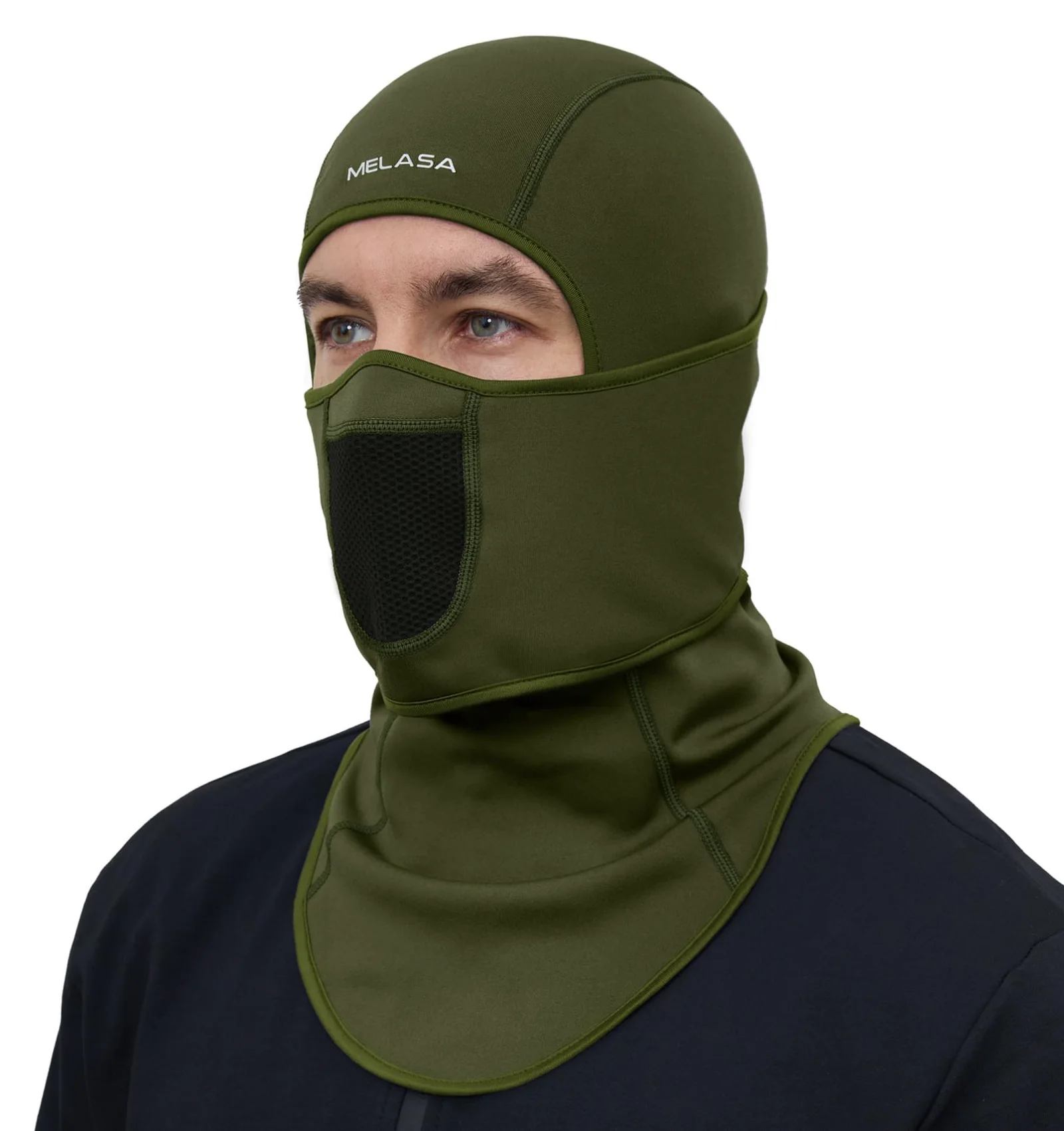
| 2-in-1 Balaclava Helmet Liner | Head, ears and face | Face cover tucks away at the top, fits 21 to 24.5 in. |
| Thermal Fleece Balaclava | Head, face and neck | Face cover pulls down to drink, mesh at the mouth |
A cap with no head size beside it is one size and stretches to fit.
Heat: what a cooling cap does and what it does not
In summer the rules change shape. OSHA's heat program comes down to water, rest and shade, both to prevent heat illness and to treat it, and it says workers new to the heat need time to get used to it, with fluids, shorter shifts and frequent breaks. OSHA also names clothing that holds in body heat, protective gear included, among the things that raise the risk.
NIOSH puts numbers on it. For moderate work in the heat lasting under two hours, drink 1 cup, 8 oz., of water every 15 to 20 minutes, take a rest and a drink when you start to feel the heat, and build up your time in hot conditions over 7 to 14 days. NIOSH does not mention hats or caps at all.
Here is what a cooling cap does. Its sweatband catches sweat before it runs into your eyes, and the mesh lets air move over your scalp under a helmet. The Mesh Hard Hat Liner 3-Pack has a 5.9 inch deep fit so it stays put, and the Cooling Mesh Skull Cap comes in 22 colors so a crew can tell whose is whose. A wet cap at the end of a hot day is a sign to drink, not a sign the cap is working harder. Water, rest and shade still do the work.
Two caps for one shift
The easiest habit for both seasons is a spare. In winter, swap the damp liner for a dry one at lunch. In summer, rinse the morning cap and let it dry on the dashboard while the second one does the afternoon. The 3-packs of cooling caps and the 2-packs of winter liners and balaclavas make that swap easy.
Every liner, balaclava and cooling cap named above is part of the MELASA catalog. The winter ones are on the winter skull caps shelf and the summer ones on the cooling skull caps shelf.
Ready to order
Pick the color and the pack on the next page
Every beanie, cap, liner and shield in the MELASA catalog is one click from here, and you pick the exact color or pack on the next page.

Checkout, delivery and returns happen with our retail partner. Prices are from our last update.